
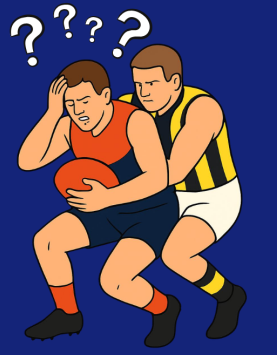
What are the risks associated with concussion and repeated head knocks?


If you are curious about what a concussion is and looks like, head to the latest blog post at https://www.goodcountryphysio.com.au/blog to find out.
Until recently, little was known about the medical consequences of head injuries, resulting in less awareness around sport-related concussion. We now have a much stronger understanding of the potential long-term effects of concussion and repeated concussions. People with post-concussion symptoms often experience a substantial symptom burden, impaired functioning, reduced ability to work, and difficulty participating in family life and daily activities.
There’s more to it than “just a head knock”
A recent study found that retired rugby players who have experienced one or more concussions had worse scores on cognitive tasks, verbal memory recall, and reaction time than those who experienced no concussions. Another study found an association between sustaining a concussion and having worse cognitive function later in life. Not only this, but research has also suggested an association between repeated concussion-related trauma and neurodegenerative conditions such as Alzheimer’s disease and chronic traumatic encephalopathy (CTE), a condition involving motor, psychological, and cognitive symptoms similar to Alzheimer’s.
Protecting our players
The best way to protect players against acute and long-term effects of concussion is to ensure that every concussion is treated seriously and that concussed players are removed from the field and are not returning to sport prematurely. Players who return to sport prematurely are at a greater risk of repeated concussion, prolonged and more severe symptoms, developing post-concussion syndrome, and developing long-term cognitive problems. Recurrent concussion is associated with a higher incidence of unconsciousness caused by injury, longer symptom recovery time, and delayed return to play. Current evidence indicates that appropriate management involving a graded return to learning and sport delivers faster symptom resolution, faster return to function and more complete recovery.
Protecting our youth
Because children have weaker necks and torsos than adults, less force is needed to cause a brain injury, making them more susceptible to concussion. The developing brain remains vulnerable into the early 20s, meaning concussion-related damage may have detrimental long-term effects.
Want to know how you can better manage concussions and prevent long-term brain damage? Head to https://www.goodcountryphysio.com.au/single-post/concussion-a-hot-topic
Chloe & Brook, 4th Year Physiotherapy Students
4th Year Physiotherapy Students at Adelaide University
Supervised by Angela Willsmore


Comments